

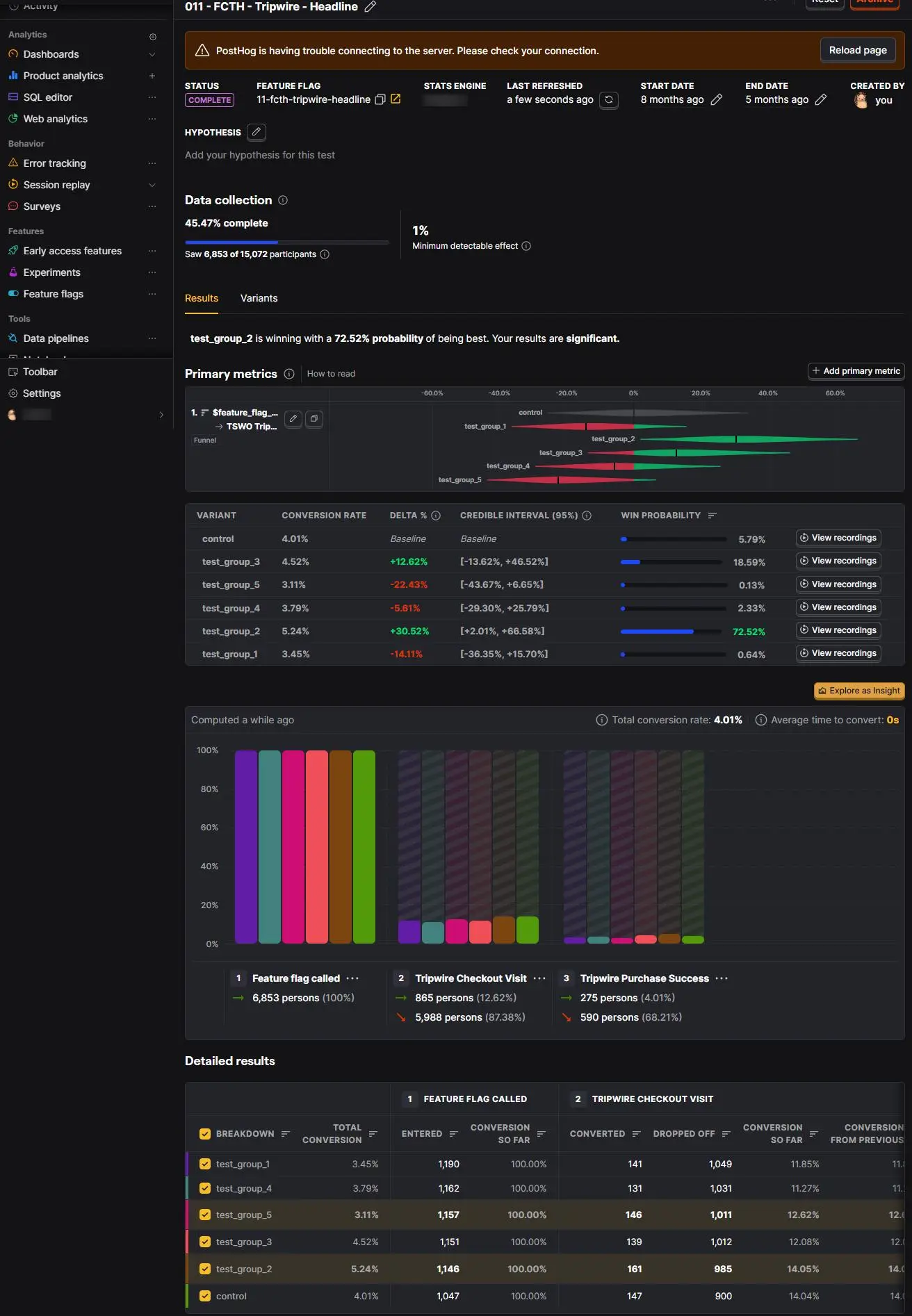
Quick answer: The headline promising free luxury experiences “in every area of your life” led this six-way test at 5.24%, but with 6,853 users over one day and a 72.52% probability of being best, it is a promising direction—not a conclusive winner.
In this test, we aimed to better understand our client’s audience by experimenting with five headline variations on their thank you page. This type of testing is especially useful when audience preferences are unclear, as a result it helps reveal what kind of messaging resonates most.
Our client offers an online course on how to travel like a VIP on a low budget, and we wanted to identify how users prefer the offer to be framed: Is it the idea of luxury travel, the concept of financial freedom, or something else entirely that hooks them?
It’s also important to note that people originally signed up for a short challenge, not the full course we’re promoting on this page. So the offer they’re seeing now isn’t exactly what they opted in for.
- Setup: We tested five headline/subheadline combinations against a control group on the tripwire page.
- Result: The one-day test included 6,853 users, and Test Group 2 outperformed the others across key metrics.
- Interpretation: The result suggests that the audience is more engaged by life transformation and financial freedom, not just travel hacks; closer alignment with the client’s financial-freedom brand may also have helped.
- Limitation: People originally signed up for a short challenge, not the full course promoted on the page, so the offer was not exactly what they opted in for.
Hypothesis
There’s a video on this page that communicates most of what we want to say. However, the headline is the first thing people see, often before they even play the video. That’s why we believe it’s one of the most influential elements on the page. It needs to clearly and compellingly communicate the offer in a tone that resonates with our audience.
While we followed general copywriting best practices which is clarity, specificity, curiosity; we also knew the ultimate rule is this: Your audience decides what works. This test was designed to learn what they respond to.
Test Design
We tested five headline/subheadline combinations against a control group on the tripwire page.
Control Group
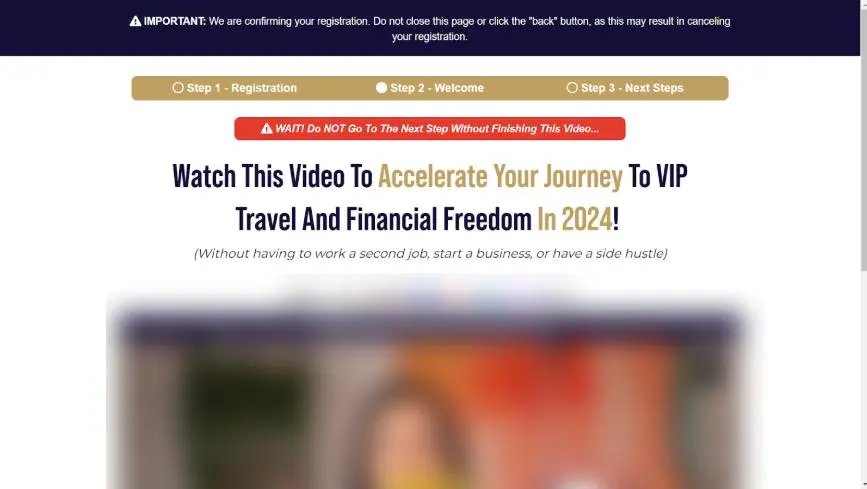
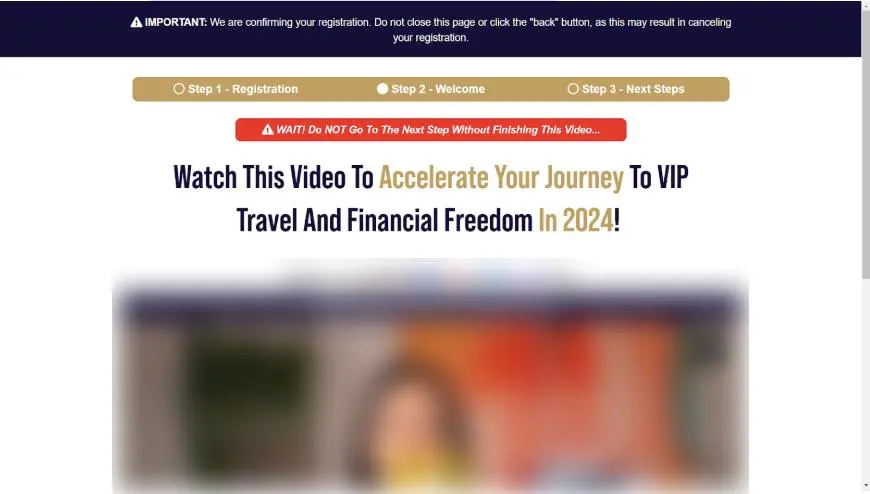
Headline: “Watch This Video To Accelerate Your Journey To VIP Travel And Financial Freedom In 2024!”
Subheadline: “(Without having to work a second job, start a business, or have a side hustle)”
Test Group 1
“Watch This Video To Accelerate Your Journey To VIP Travel And Financial Freedom In 2024!” Same headline as control with No subheadline
Test Group 2
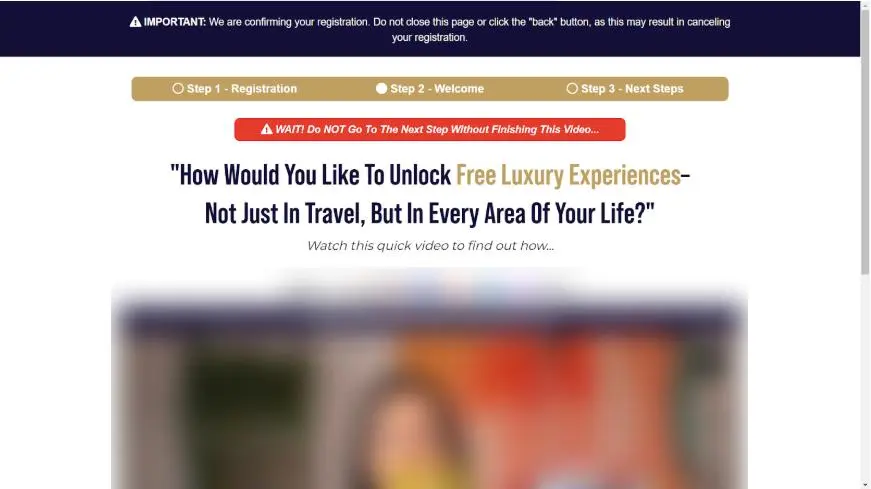
Headline: “How Would You Like To Unlock Free Luxury Experiences—Not Just In Travel, But In Every Area Of Your Life?”
Subheadline: “Watch this quick video to find out how …”
Test Group 3
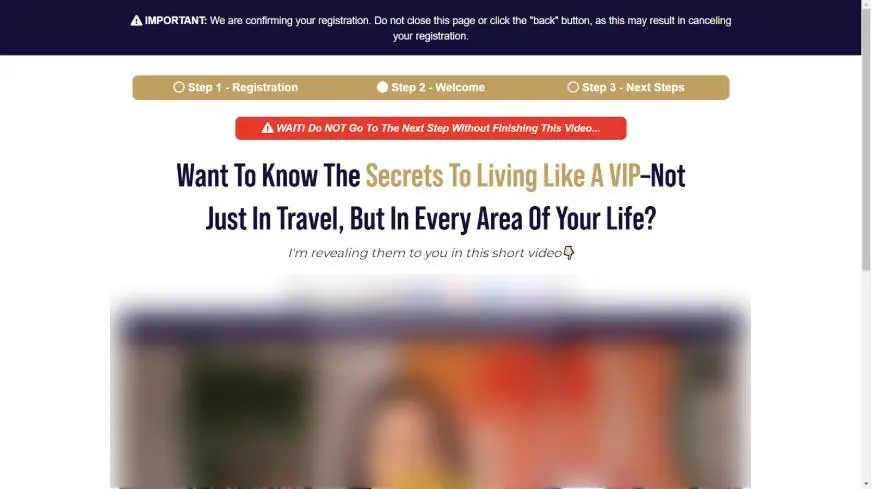
Headline: “Want To Know The Secrets To Living Like A VIP—Not Just In Travel, But In Every Area Of Your Life?”
Subheadline: “I’m revealing them to you in this short video”
Test Group 4
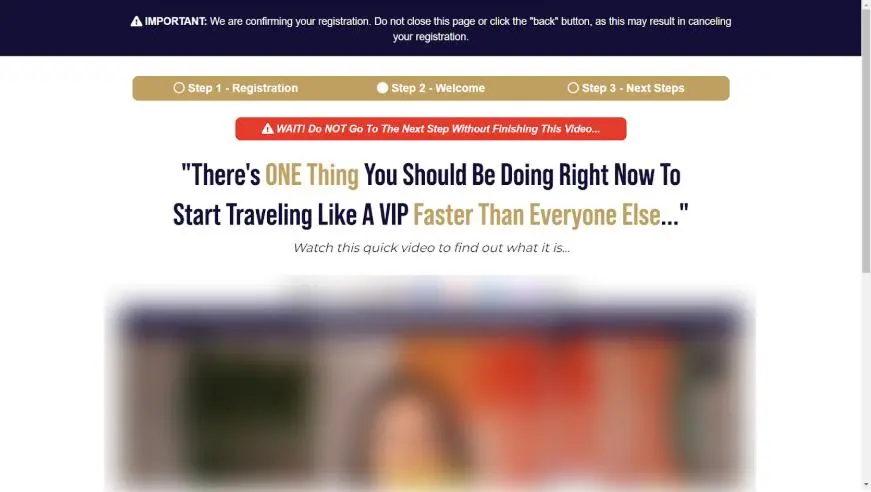
Headline: “There’s ONE Thing You Should Be Doing Right Now To Start Traveling Like A VIP Faster Than Everyone Else …”
Subheadline: “Watch this quick video to find out what it is …”
Test Group 5
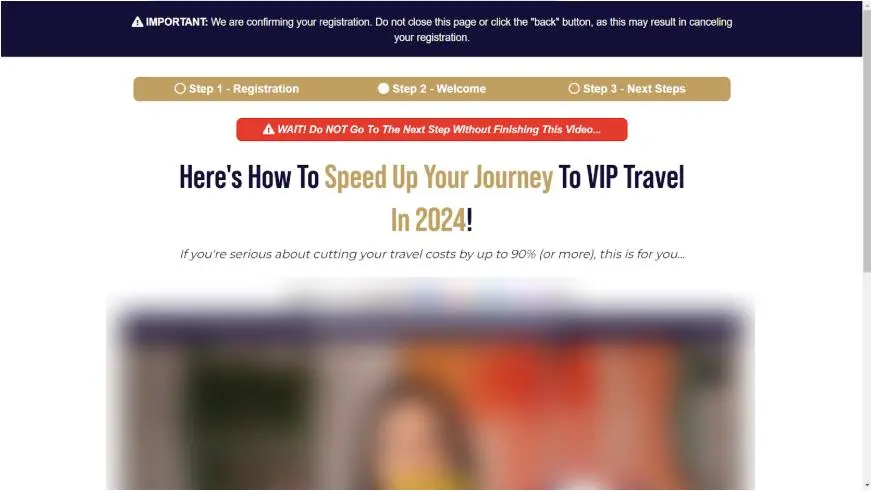
Headline: “Here’s How To Speed Up Your Journey To VIP Travel In 2024!”
Subheadline: “If you’re serious about cutting your travel costs by up to 90% (or more), this is for you …”
Metrics & Duration
We tracked performance using two key metrics; PostHog’s running-time and sample-size guidance can help plan similar tests. Our A/B testing metrics guide explains how to choose the primary metric:
- Primary metric: Tripwire purchase success – Final conversion rate (actual course purchase)
- Secondary metric: Tripwire checkout visit – Measures how many proceeded to the checkout
Results
The test ran for 1 day with 6,853 users participating.
Test Group 2 emerged as the winning variant, outperforming all others across key metrics. For a deeper check that an A/B test result can be trusted, see our experimentation system audit.
For another headline experiment, compare the results in our Headline A/B Test.
Conclusion
Each headline was crafted to appeal to a slightly different emotional angle:
- Some emphasized travel.
- Others linked travel with financial freedom.
- A few aimed to spark curiosity with open loops (“One thing you should be doing…”).
The win of Test Group 2 suggests a key insight:
Our audience is more engaged by the idea of life transformation and financial freedom; not just travel hacks.
Another possible reason this test group performed better is brand alignment. Our client’s personal brand is centered around financial freedom, and travel hacks are just one part of that broader message. The winning test headline aligns more closely with her overall brand, which may have contributed to its success.
Frequently asked questions
What messaging angles did the headline experiment compare?
The six experiences included the control plus five variations emphasizing combinations of VIP travel, financial freedom, luxury beyond travel, curiosity, speed, and cost reduction. This let the team explore which framing best connected a challenge registrant to the separate course offer on the thank-you page.
Which headline performed best?
Test Group 2—“How Would You Like To Unlock Free Luxury Experiences—Not Just In Travel, But In Every Area Of Your Life?”—led the one-day test. It converted at 5.24% and had a 72.52% probability of being best among 6,853 participants.
Was Test Group 2 a conclusive winner?
No. It ranked first in the observed data, but a 72.52% probability of being best leaves substantial uncertainty, especially in a six-way test run for one day. The result is useful for choosing a focused follow-up, not strong enough to establish a permanent messaging rule by itself.
What made the leading headline different?
It expanded the promise beyond travel tactics into free luxury experiences across life and paired that promise with a simple invitation to watch the video. That broader transformation also fit the client’s financial-freedom brand, but the test did not isolate which phrase or brand association produced the lead.
Why should purchases matter more than checkout visits?
A checkout visit shows interest, while a completed purchase shows that the headline attracted someone willing to accept the offer. Using purchase success as the primary metric prevents an intriguing headline from winning merely because it creates curiosity that disappears before payment.
What is the trade-off in a multi-variant headline test?
Testing several distinct angles can explore the message space quickly, but it divides traffic across more groups and increases the number of comparisons. That usually requires more data and a planned analysis so the most extreme early result is not mistaken for a reliable winner.
Why might this result not transfer to a different offer?
These visitors had registered for a short challenge and then encountered a separate tripwire course, while the client’s brand already connected travel with financial freedom. A different audience, acquisition promise, price, or brand position could respond to the same headline very differently.
What should the next headline experiment test?
Retest the leading concept against the control over a planned duration, ideally in a simpler two-variant comparison. If it repeats, isolate the broader life-transformation promise, the financial-freedom alignment, and the shorter supporting line in separate tests to learn what actually drives the effect.

This test didn’t just optimize one page, it gave us direction for future messaging across emails, ads, and landing pages.
It also reinforces a core A/B testing truth: You don’t run tests to get lucky. You run them to get smarter.
Read our step-by-step guides to understand how we ran A/B tests on WordPress, Shopify, and ClickFunnels.
Read this PostHog article to better understand how to design and run experiments effectively. For a broader check that the PostHog data supports the result, see our PostHog audit.